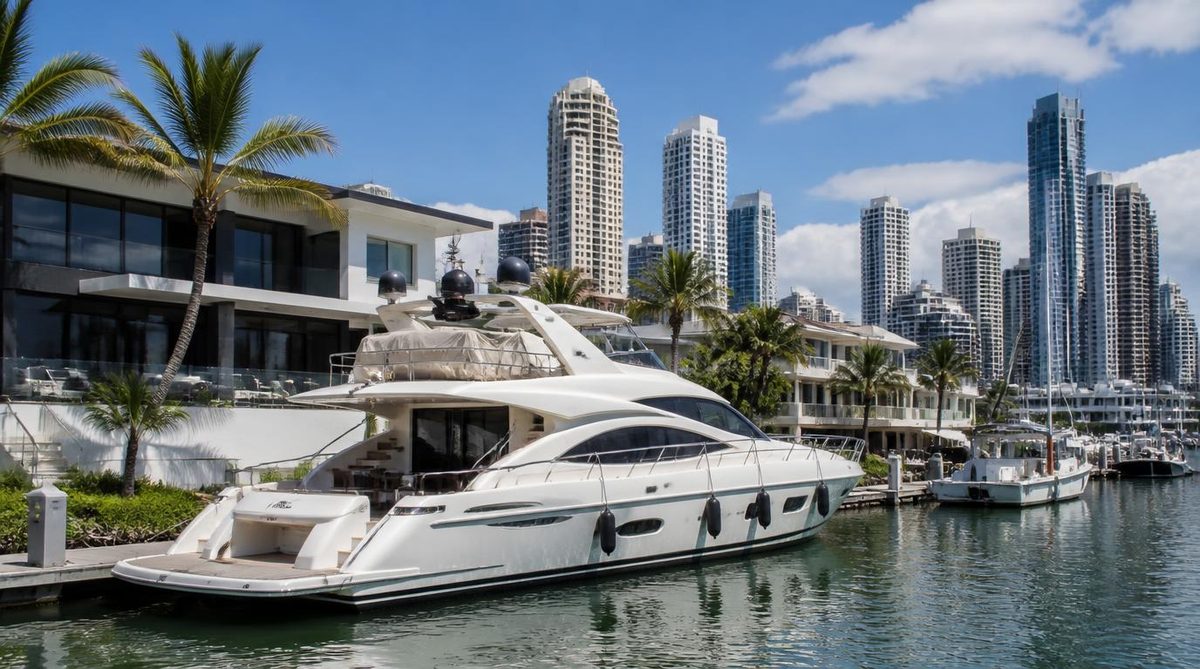
Yes, parts of the Gold Coast are very wealthy. Premium beachfront streets, canal estates and homes near the Broadwater contain some of the city’s clearest signs of affluence. Yet the Gold Coast as a whole is economically mixed. Expensive real estate and visible luxury do not mean every suburb or household is wealthy.
The useful answer sits below the city level. Wealth follows scarce land, water access, dwelling type and household circumstances. A beachfront owner, a long-term canal resident and a renter in a central apartment may live within a short drive of each other while facing very different financial conditions.
Why is the whole city difficult to label as wealthy?
The Gold Coast is a large urban area, not one continuous resort district. It includes high-rise centres, older residential suburbs, gated communities, canal estates, new housing areas and established inland neighbourhoods. Each part has its own mix of homes, residents and costs.
Calling the entire city wealthy hides those differences. Some households own valuable property with little debt. Others pay high rent or carry a large mortgage. Retirees may live in valuable homes while receiving modest incomes. Workers who support the tourism, retail and service economy can live near luxury precincts without sharing the same level of wealth.
This is why the Gold Coast can look rich without every resident being rich. Its most expensive homes sit in prominent places. They face beaches, waterways and busy roads. High-rise towers shape the skyline. Boats, prestige cars and luxury shops are easy to see. Ordinary homes and household budgets attract far less attention.
Property demand also says more about a location than it does about each person living there. Buyers may pay a premium for scarce beachfront land, water frontage or access to major centres. That demand raises the value of certain properties. It does not turn the wider population into a uniformly affluent group.
A more accurate description is that the Gold Coast contains strong pockets of wealth within a broad and varied city. The suburb, street and property type often tell you more than the Gold Coast label.
Where does affluence tend to concentrate?
Affluence tends to gather around land features that cannot be copied. Direct beach access is scarce. Canal frontage is limited. Broadwater views and private boating access appeal to buyers who can pay for them. Large blocks close to central amenities also carry value because they combine space with convenience.
Mermaid Beach is widely linked with premium coastal real estate. Its appeal comes from its position near the beach and established central areas. Some homes occupy land that is difficult to replace, which can attract strong demand when properties reach the market.
Broadbeach Waters represents a different form of wealth. Its canal homes offer water frontage while remaining close to Broadbeach and its shops, dining and services. Clear Island Waters also contains sought-after waterfront homes, including larger properties in planned residential settings. These areas show that Gold Coast wealth is not confined to towers or direct beachfront addresses.
The Broadwater creates another premium setting. Views, boating access and proximity to the water can lift demand for certain homes and apartments. Even within a waterfront suburb, though, value can change from one street to the next. A main-water position may differ greatly from a property without a view. Block size, dwelling age, renovation quality and road noise can also change the result.
There is no permanent answer to which Gold Coast suburb is the richest. The result changes with the measure used. Median house value may produce one answer. Household income may produce another. A record home sale measures a single transaction, while a suburb median describes a set of sales during a stated period.
Property type matters as well. Comparing the median price of detached houses in one suburb with all apartments in another gives a poor picture. The mix of dwellings can pull a suburb-wide figure up or down. A place with luxury penthouses may also contain many smaller units. A canal suburb may have fewer sales, making its reported median more sensitive to the homes sold during that period.
Terms such as “millionaires row” can describe a reputation, but they are not a reliable financial measure. They often refer to trophy homes or a small group of streets. They say little about the wider suburb and even less about the whole city.
Why does Gold Coast wealth look so visible?
The city’s luxury image comes from where its most recognisable development sits. Surfers Paradise and Broadbeach place high-rise apartments close to the ocean, shopping and entertainment. Waterfront homes line canals and parts of the Broadwater. Visitors spend much of their time in these highly visible coastal areas.
Tourism images also favour the beach, skyline and expensive leisure experiences. Real estate marketing favours renovated homes, ocean views and major sales. Together, these images give premium property far more public attention than the ordinary streets where much of the population lives.
Surfers Paradise shows why appearance can mislead. Its skyline suggests concentrated wealth, but an apartment centre can contain a wide range of properties. A large penthouse, an older unit and a holiday apartment may share the same postcode while serving very different buyers. A famous address does not make every dwelling equally valuable.
Canal estates create a similar effect at street level. Large homes, boats and private pontoons make wealth easy to see from roads or waterways. Yet these estates form only part of the city. Inland neighbourhoods and less prominent residential areas do not appear as often in travel campaigns or prestige property reports.
Lifestyle spending adds another layer. Restaurants, beach clubs, luxury retail and recreation businesses are concentrated in places where visitors and higher-spending residents gather. Seeing that spending does not reveal the income of the average household. It shows where consumption is most public.
The Gold Coast therefore has a stronger luxury image than a simple citywide financial label can explain. The image is real, but it is selective. It reflects the parts of the city that receive the most attention.
Does an expensive home mean its occupants have a high income?
No. Property wealth, income and spending power measure different things.
Property wealth usually refers to the value held in real estate after debt is considered. Household income is the money entering a household through work, business, investments or other sources. Disposable income is what remains available after tax and essential costs. Lifestyle signals are visible choices such as cars, boats, dining and travel. One household can rank very differently under each measure.
Consider a hypothetical long-term owner who bought a modest coastal home before local property values rose. That owner may now hold substantial housing equity but receive a modest retirement income. The property makes the household wealthy on paper, yet rates, insurance, repairs and daily bills can still feel costly.
Now consider a hypothetical high-income renter in a central apartment. That person may have strong monthly cash flow but own no Gold Coast property. Income data could place the renter above the long-term owner, while property data would place the owner ahead.
A recent buyer creates another contrast. The home may have a high market value, but a large loan can leave the household with limited free cash after repayments and other costs. Looking at the sale price alone would overstate the household’s financial comfort.
Investors make citywide judgments harder. A valuable home or apartment may belong to someone who lives elsewhere. Holiday properties can sit empty for part of the year. Some apartments operate as short-stay accommodation. The value of local real estate is therefore not the same as wealth held by permanent local residents.
Median property prices need careful reading for the same reason. A median marks the middle sale in a group of transactions. It does not describe every dwelling, the owner’s debt or the resident’s income. It can also move when the types of homes being sold change.
Housing costs can make a desirable area feel expensive even to people with solid incomes. Purchase prices are one part of that pressure. Rent, body corporate fees, maintenance, transport and insurance can shape the lived cost of a location. A household may earn well and still feel stretched if housing takes a large share of its budget.
Claims about Gold Coast wealth should therefore state both the measure and the date. A current suburb report can help with property values. Census data can help with household income and tenure. Neither source should be used as a substitute for the other.
How does the picture change across the Gold Coast?
The coastal strip often carries a premium because beach access is limited and widely desired. That does not mean every coastal property is a luxury home. Older units, compact apartments and properties beside busy roads can sit near far more expensive addresses.
Canal and Broadwater areas follow another pattern. Water frontage, views and boating access can raise demand. The size and quality of that premium depend on the exact position. Main-water frontage, canal width, bridge access and exposure to traffic can separate properties that look similar on a map.
Central apartment precincts need their own comparison. Building age, floor level, view, facilities and body corporate costs can have a major effect on value and ongoing expense. A suburb name alone cannot capture those differences.
Southport also shows why the Gold Coast should not be treated as one resort strip. It is a major centre with offices, services, education, health facilities and varied housing. Its role is different from a prestige beach pocket or a low-density canal estate. That mix can place modest apartments, newer towers and established homes within the same broad area.
Farther inland, residents may trade direct water access for more space or a different housing style. Newer growth areas can have their own price pressures, especially where transport and services are still developing. These places form part of the same city, but their housing and daily costs can differ sharply from central beachfront districts.
The safest way to judge affluence is to compare like with like. A renovated waterfront house should be compared with similar waterfront houses. An older two-bedroom unit should be compared with units of a similar age, size and position. Mixing property types creates a result that may sound clear while saying very little.
What should you check before calling a suburb affluent?
Start by deciding what “wealthy” means for your purpose. A homebuyer may care about property values and ownership costs. A business owner may care about household income and local spending power. A renter may care more about wages, rent and transport costs.
- Choose one measure. Decide whether you are assessing house values, household income, owner equity or visible luxury.
- Use current suburb-level data. Check the reporting date and avoid treating an old ranking as a present fact.
- Compare the same property type. Separate houses from units and waterfront homes from ordinary residential properties.
- Include everyday costs. Consider rent or repayments, insurance, body corporate charges, maintenance and travel needs.
These checks explain why two people can give different answers about the same suburb and both appear correct. One may be describing expensive houses. The other may be describing the incomes of residents. Without a clear measure, the word “wealthy” becomes too loose to guide a decision.
Actionable takeaway: Treat the Gold Coast as a city with concentrated wealthy enclaves, then judge any claim of affluence using current suburb-level data for one clearly defined measure.