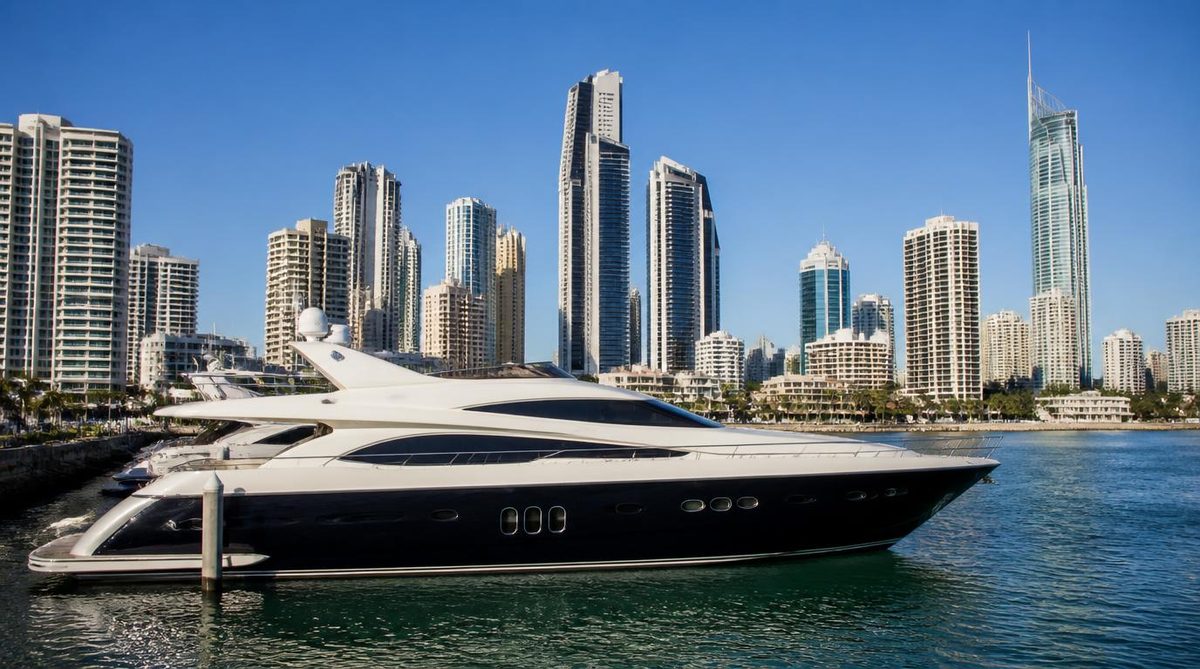
The Gold Coast looks rich because valuable coastal land, high property demand, tourism, construction, migration and outside investment put money where people can see it. Luxury towers rise beside the beach. Large homes line the waterways. Hotels, restaurants and shopping areas serve people with money to spend.
That image has a real economic base. The Gold Coast is a large city with work spread across health, education, retail, construction, property, tourism and professional services. Yet the image can mislead. An expensive home does not prove that its owner has a high income. A busy hotel does not mean its workers are wealthy. A rich suburb cannot describe the finances of a whole city.
The best way to understand the Gold Coast is to separate three things: the size of its economy, the value of its property and the wealth of its households. They overlap, but they are not the same.
Why is the Gold Coast more than a resort economy?
The Gold Coast works as a prettiest town in Queensland as well as a holiday destination. Visitors remain a key source of spending, but hundreds of thousands of residents also need homes, schools, medical care, shops, transport and business services. Those daily needs support an economy that keeps moving after tourists leave.
It helps to divide the local economy into three connected parts.
- The visitor economy includes accommodation, dining, entertainment, events and tourist attractions.
- The development economy includes construction, real estate, planning, building services and property finance.
- The resident economy includes health, education, retail, trades, government services and professional work.
This mix makes the Gold Coast less dependent on one season or one type of customer. A new resident may buy a home, hire a tradesperson, enrol a child in school and use local health services. A visitor may pay for a room, meals and entertainment. A developer may employ designers, builders, sales teams and legal advisers. Each stream feeds other parts of the city.
The Gold Coast also has several business centres rather than one small resort strip. Southport serves as a major commercial and service centre. Other areas support offices, health facilities, education and retail. This spread matters because it shows that the local economy reaches well beyond beachfront tourism.
The city still faces shifts in demand. Construction can slow, visitor numbers can change and household spending can weaken. Its range of industries gives it more ways to generate work and business activity than the beach town label suggests.
Why does property make the city look especially wealthy?
Property is the clearest sign of Gold Coast wealth because the most valuable land sits in public view. People can see beachfront towers, waterfront homes, cranes and sales offices. They cannot see a household balance sheet.
The basic force is scarcity. Beachfront land is finite. Land beside the Gold Coast Broadwater and other waterways is also limited. Demand comes from local residents, people moving to Queensland, lifestyle buyers and investors. When many buyers want a limited group of well placed properties, those sites become more valuable.
High-rise apartments change how that demand fits into the city. One block can hold many homes instead of one. This gives more buyers access to a coastal location and raises the value of redevelopment sites. It also creates a strong visual effect. A group of new towers can make wealth seem larger and more widespread than it is.
Waterfront houses create a different form of scarcity. A home with direct water access occupies land that cannot be copied inland. Buyers may pay for the location, view, privacy and access rather than the building alone. This pushes wealth into narrow, easy to notice pockets.
Does an expensive home mean the owner has a high income?
No. Property value and income measure different things.
A household may have bought years ago and gained substantial home equity as land values rose. Its current income may be modest. Another household may earn a strong income but own little because it rents or bought recently with a large loan. A third may own an investment property while carrying heavy debt.
This difference explains why the Gold Coast can be property rich while some owners still watch every dollar. Equity is an asset. It does not always provide cash for groceries, power bills or loan payments. Owners usually need to sell, borrow against the property or earn rent before that value becomes spendable money.
Rising property values also divide residents by timing. Established owners gain from higher valuations. First home buyers face a larger entry cost. Renters may receive no direct benefit while dealing with pressure in the same housing market. The city can therefore become richer on paper without every household feeling more secure.
How does tourism bring wealth into the Gold Coast?
Tourism brings money from outside the local economy. Domestic and international visitors pay local businesses for accommodation, food, shopping, transport, events and amusement parks. That spending supports jobs and makes commercial property in visitor areas more useful.
The effect is strongest in places built to capture visitor spending. Surfers Paradise is the clearest example. Hotels, apartment towers, restaurants and shops sit close together, so a large amount of commercial activity is packed into a small area. The result looks wealthy because the spending is concentrated and highly visible.
Tourism also supports investment. Businesses improve rooms, venues and attractions when they expect future demand. Property owners may redevelop sites to serve more guests. Public spaces and transport links can receive attention because they affect both visitors and residents.
Yet turnover is not personal wealth. A full restaurant can have high sales while facing large rent, food and wage costs. A busy hotel may produce strong revenue while many staff work in modestly paid roles. Visitor spending strengthens the city economy, but it does not flow evenly to every worker or household.
This is one reason the Gold Coast can feel richer to a visitor than it does to a resident under housing stress. Visitors spend time in polished commercial areas. Residents experience the whole city, including ordinary workplaces, outer neighbourhoods and household bills.
How do migration and investment keep development moving?
The Gold Coast sits within the wider South East Queensland economy. Its links with Brisbane give residents and businesses access to a much larger urban region. People can move between the two cities for work, services, family and business without treating the Gold Coast as an isolated town.
Lifestyle appeal draws new residents, but their effect reaches beyond housing. More people create demand for doctors, teachers, shops, trades, offices and transport. Businesses respond to that demand. Developers add homes and commercial space. New services can then make the city more attractive to the next group of residents.
The cycle works like this:
- Coastal living and city services attract people.
- Population growth raises demand for homes and daily services.
- Businesses and investors fund new capacity.
- Added jobs and services strengthen the appeal of the city.
Outside capital speeds up this process. A buyer does not need to earn all their money on the Gold Coast before investing there. People may arrive with savings, property equity or business funds built elsewhere. Companies can also direct capital into local projects because they expect demand from future residents or visitors.
This helps explain how a city can display more wealth than local wages alone seem able to support. The property market can draw on income and assets created in other places. Tourism does something similar through visitor spending. In both cases, money crosses into the local economy.
Growth does not guarantee a gain for every resident. New development may create jobs and services while also increasing competition for well located land. A homeowner, renter, developer and hospitality worker can experience the same period of growth in very different ways.
Why is Gold Coast wealth so easy to overestimate?
The city places its richest scenes in the foreground. Beaches, marinas, waterfront houses, hotel entrances and new towers appear in photos and visitor districts. Lower income households, rental pressure and service work are less visible.
This creates a visibility effect. People judge the whole Gold Coast by the small parts they see most often. Yet a luxury car outside a hotel says little about the income of the person cleaning its rooms. A high apartment sale says little about the finances of a nearby renter.
Four measures often get mixed together:
- Economic output measures the value of activity produced across the city.
- Household income measures money received over a period.
- Property equity measures the value an owner holds after property debt is considered.
- Net wealth considers assets and debts together.
A place can score strongly on one measure and less strongly on another. A city may have large economic output because it has many residents and businesses. A suburb may have costly homes because its land is scarce. Neither fact proves that the typical worker has high disposable income.
Can one wealthy suburb represent the whole city?
No. Wealth is concentrated by geography as well as ownership. Waterfront streets and prestige developments can sit close to households facing high rent or mortgage costs. Even within one suburb, owners and renters may have very different financial positions.
Claims about the richest suburb also need a clear measure. The answer could change depending on whether the measure is home value, household income, property equity or total net wealth. It could also change with the period being measured. A league table without those details creates more confusion than insight.
A hypothetical example shows the problem. One suburb could have very expensive homes held by long term owners with moderate retirement incomes. Another could have cheaper homes occupied by high earning professionals. The first may rank higher by property value, while the second ranks higher by household income. Calling either one richer without naming the measure hides the real difference.
What does rich actually mean in this case?
The Gold Coast is economically powerful, property rich and visibly affluent. Its wealth comes from the interaction of a large resident economy, scarce coastal land, visitor spending, development, migration and investment from beyond the city.
That does not make every Gold Coast household rich. Property gains favour people who already own valuable assets. Tourism revenue passes through businesses with costs and debts. New investment can create work while making sought after land harder to afford. The benefits depend on where a person lives, how they earn money, whether they own property and how much debt they carry.
The most accurate answer therefore needs three checks. First, name the unit: the city economy, a business, a suburb or a household. Next, name the measure: output, income, property value or net assets. Last, name the geography: a waterfront pocket, a visitor precinct or the whole Gold Coast.
Before accepting any claim that the Gold Coast is rich, check its unit, measure and geography.