The Gold Coast is most famous for its long surf beaches, outdoor coastal lifestyle, the high-rise skyline of Surfers Paradise and major theme parks. Shopping, nightlife and the nearby rainforest hinterland add more depth, but the beach remains at the heart of the city's identity.
What makes the Gold Coast stand out is the way these experiences sit close together. You can watch surfers from the sand, eat beside a busy beachfront precinct and spend another day among rainforest and waterfalls. Families can also build whole days around theme parks or sheltered waterfront areas away from the open Pacific Ocean.
This mix gives the Gold Coast a clear image without limiting it to one type of holiday. It can feel bright and busy near major entertainment areas, relaxed along local beaches and quiet once the road turns inland.
Why do beaches define the Gold Coast?
Beaches define the Gold Coast because the coastline shapes how the city looks, moves and spends its free time. The Pacific Ocean runs beside a long urban strip, so the beach is part of daily life rather than an attraction hidden outside the city.
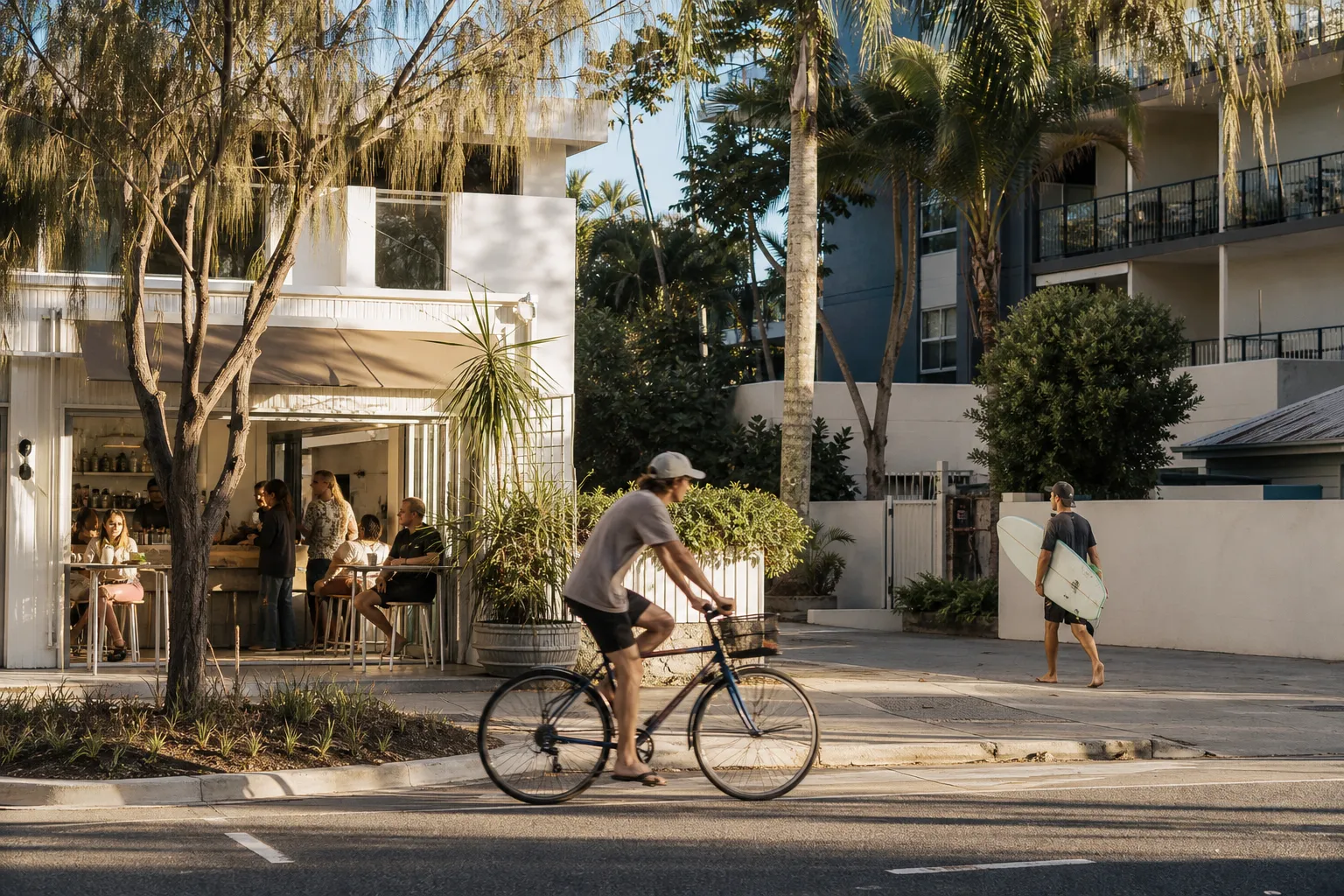
Surfing is central to that identity. Boards on roof racks, surf schools near the sand and people checking the swell are common sights. Even visitors who never stand on a board can see how surf culture affects local routines. Early mornings begin on the beach, paths fill with walkers and cafes become busy after people leave the water.
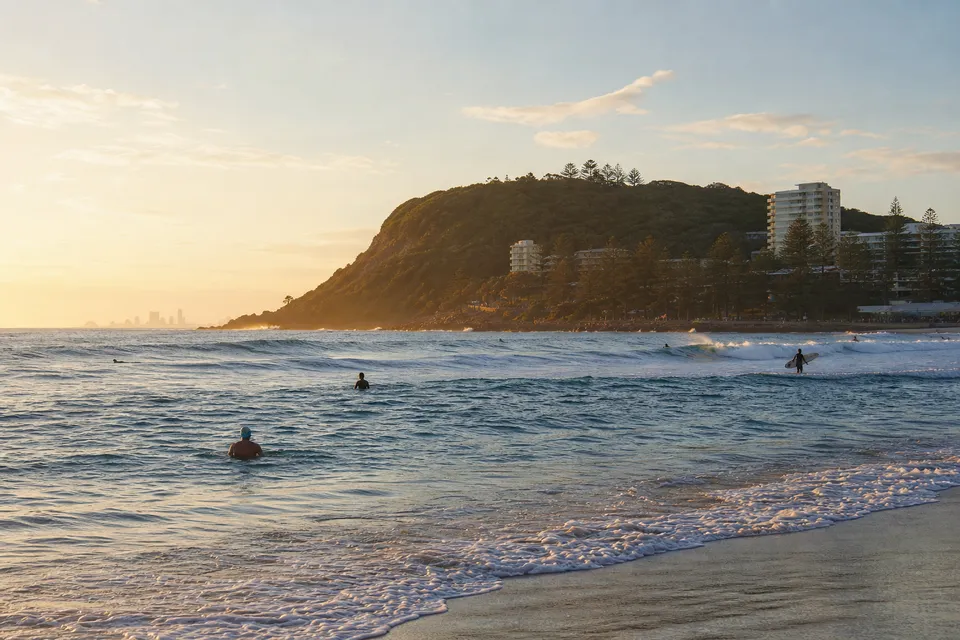
The coastal identity reaches far beyond one famous precinct. Surfers Paradise offers a busy urban beach setting, while Burleigh Heads is known for the meeting of sand, surf and a green headland. Mermaid Beach shows how the same coastline can feel more residential. These examples explain the range of the coast without turning one suburb into the answer for every traveller.
The beach also supports simple holiday time. A visitor can swim in a patrolled area, walk beside the ocean, watch surfers or sit on the sand. Local conditions can change, so swimmers should read beach signs and follow lifeguard directions.
For most first visits, beach time should form the base of the trip. Other attractions work around it. This order reflects what the Gold Coast is known for and leaves room to experience the coast at different times of day.
Why is Surfers Paradise such a strong symbol of the city?
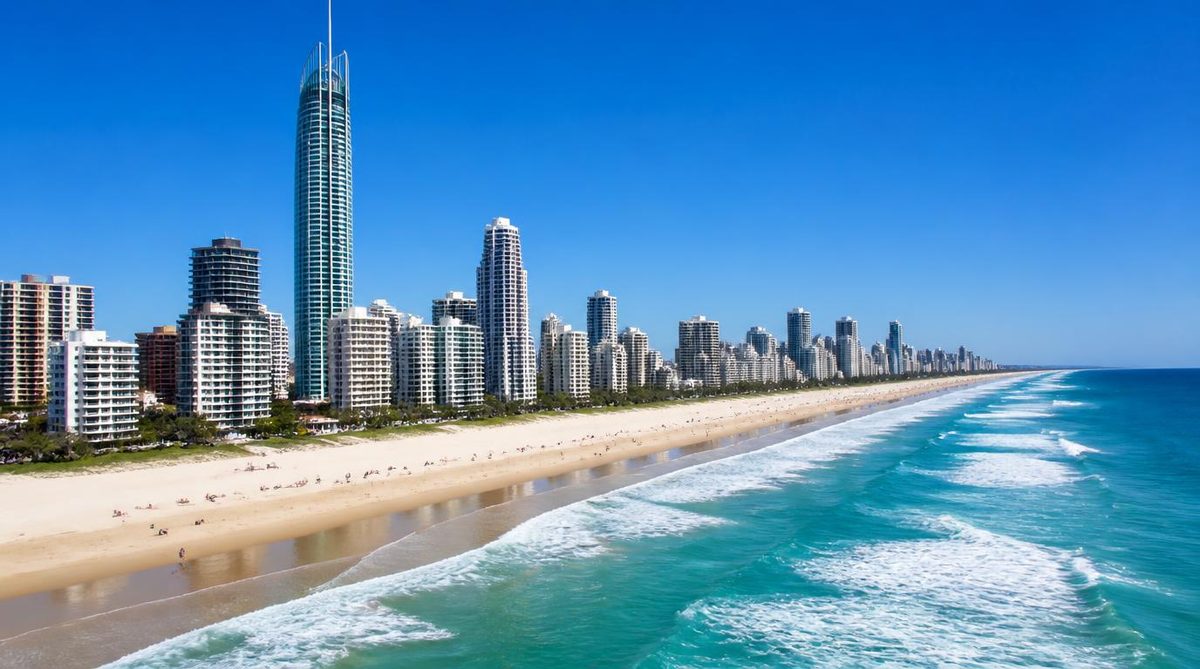
Surfers Paradise became a symbol of the Gold Coast because it places a surf beach directly beside a dense resort skyline. The view of sand, ocean and tall buildings is easy to recognise. Few images capture the city's mix of natural appeal and urban entertainment as clearly.
The precinct concentrates many parts of a city break within a compact beachfront setting. Restaurants, shops and entertainment venues sit near the sand. At night, bright signs and busy streets replace the slower rhythm found on some other parts of the coast. This is also where the Gold Coast's nightlife image is most visible.
That energy explains both the appeal and the limits of Surfers Paradise as a symbol. It gives visitors dining, shopping and evening activity close to the beach. It does not represent the whole city. Other coastal areas feel lower, quieter or more residential, while inland districts bear little likeness to its resort streets.
The precinct is best understood as the Gold Coast's urban beach face. It suits people who want activity around them and enjoy moving between the ocean and city entertainment. Someone can spend the morning on the sand, browse nearby shops later and stay in the same area for dinner.
This meeting of surf and skyline is more distinctive than either part on its own. Australia has many beaches and many high-rise districts. Surfers Paradise is famous because both occupy the same narrow beachfront scene.
How did theme parks become another Gold Coast calling card?
Theme parks became a second calling card by giving visitors a major reason to leave the beachfront for a full day. They broadened the idea of a Gold Coast holiday from sand and surf to structured family entertainment.
Several large attractions sit toward the northern Gold Coast, with a strong concentration around Coomera and nearby districts. This creates an entertainment zone that feels separate from the central beach precincts. Visitors travel there for rides, shows, water attractions and other planned activities rather than casual time by the ocean.
This part of the city's appeal matters most for families, groups and travellers who want a clear daily plan. A beach day can remain loose. People arrive when they wish and leave when the weather changes. A theme park day involves entry, travel and enough time to enjoy a large site. It deserves its own place in an itinerary.
The parks also help explain why the destination appeals across school holidays and family trips. Children who tire of repeated beach days can switch to a different kind of activity. Adults can choose between relaxed coastal time and a more active entertainment day.
Visitors should avoid treating a major park as a brief stop between other plans. Allowing a dedicated day reduces rushing and makes travel across the city easier to manage. Current opening details, ticket terms and attraction access should be checked with the venue before the visit.
The Gold Coast remains a beach destination first. Its theme park cluster is famous because it adds a large, organised form of entertainment that many other coastal cities do not offer at the same scale within the same holiday setting.
Does the Gold Coast offer water activities away from the surf?
The Gold Coast offers sheltered waterfront settings as well as ocean-facing surf beaches. The Gold Coast Broadwater, near Southport and the northern coastal strip, creates a different relationship with the water from the exposed Pacific coast.
Open beaches receive ocean swell and support the surf culture for which the city is known. The Broadwater sits behind protective coastal landforms and islands. Its shores include parkland, boating areas and places where people spend time beside the water without facing a breaking surf beach.
This contrast matters for non-surfers and families. A person may love the water but have little interest in waves. The Broadwater opens the door to boating, paddling, fishing and foreshore recreation where those activities are permitted and suitable.
Sheltered does not mean the water has the same conditions every day. Wind, tides, boat traffic and weather can affect an outing. People should match the activity to the location, read signs and follow advice from lifeguards or licensed operators.
Southport also gives the Broadwater an urban setting. Parks and city facilities sit near the shore, so visitors can combine waterfront time with other plans. The experience feels less like a classic surf holiday and more like recreation around a broad protected waterway.
This is one of the details quick descriptions of the Gold Coast often miss. The city's fame comes from the ocean, yet its water-based lifestyle is wider than surfing. The Broadwater provides another way to understand why boats, beaches and outdoor time feature so strongly in local life.
What makes the hinterland different from the beachfront?
The Gold Coast hinterland replaces sand, towers and bright coastal streets with rainforest, ridges, walking tracks and waterfalls. This change in scenery gives the destination one of its clearest contrasts.
Inland routes pass through greener residential areas around places such as Mudgeeraba before climbing towards forested country. The air can feel cooler, the roads narrower and the pace slower. Lookouts reveal how quickly the dense coastal strip gives way to hills and valleys.
Rainforest is the main draw. Walks can pass beneath thick tree cover, beside creeks or towards waterfall views. Bird calls and running water replace the sound of traffic and surf. The setting feels far removed from Surfers Paradise, even though both belong to the wider Gold Coast experience.
The hinterland adds more than another attraction to a list. It changes the shape of a holiday. After time on exposed beaches or busy entertainment streets, a forest day offers shade, space and a slower focus. It also gives travellers an option when they want to explore the region's natural areas beyond the coast.
Visitors should plan this as a separate outing. Road access, walking track conditions and park notices can change after rain or maintenance. Check current advice from the relevant park authority before leaving, carry suitable water and clothing, and follow all closure signs.
Waterfalls also need care. A waterfall may be visible without being open or suitable for swimming. Access rules and conditions should guide the plan rather than an image seen online.
The coast-to-rainforest shift is a defining Gold Coast feature. The city is famous for its beachfront energy, while the hinterland shows that its natural appeal does not stop at the sand.
Which Gold Coast experiences should shape your trip?
Choose the experiences that match the holiday you want, then group them into clear day types. The Gold Coast spreads its main attractions across the coast, northern entertainment areas and inland ranges. Trying to combine distant experiences in one rushed day can hide what makes each setting enjoyable.
A useful plan starts with the beach because it provides the clearest answer to what the Gold Coast is famous for. Add the skyline, theme parks, Broadwater or hinterland according to your interests and available time.
- Choose a surf coast day for swimming in patrolled areas, watching surfers, walking by the Pacific and spending unhurried time on the sand.
- Choose an urban beach day for Surfers Paradise, where the beachfront skyline meets restaurants, shopping, entertainment and nightlife.
- Choose a theme park day for planned family entertainment toward the northern Gold Coast. Keep most of the day free for the attraction.
- Choose a Broadwater day for foreshore time, boating or suitable sheltered-water activities around Southport and nearby shores.
- Choose a hinterland day for rainforest walks, lookouts and waterfall scenery after checking current weather, access and track notices.
Brisbane or Gold Coast. Its defining experiences occupy different settings and reward enough time to see their contrast.
Build your trip around the beach first, then choose two experiences from the skyline, theme parks, Broadwater and hinterland that best match how you want to spend your days.